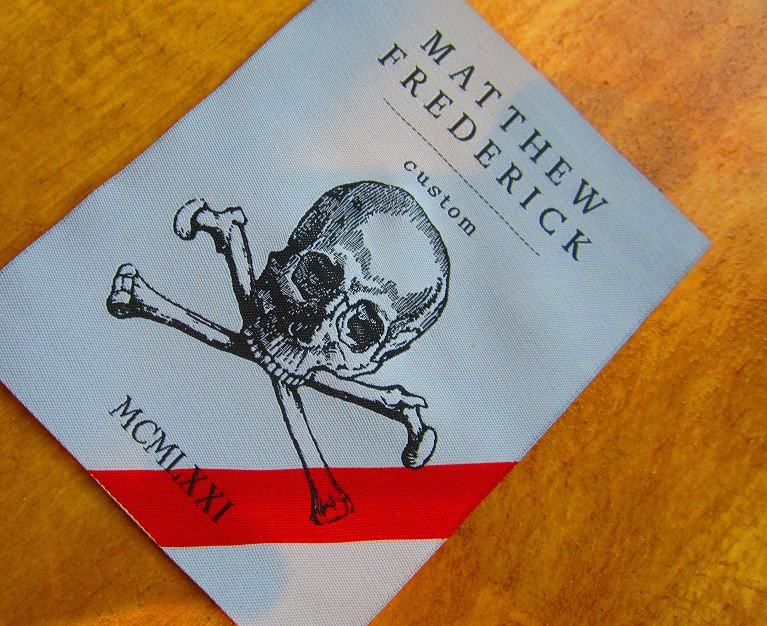
Fabric labels are created by weaving threads together to form names, letters, symbols, patterns, or other identifying details. Woven Damask Clothing Labels are commonly used on garments and textile products because the woven structure can create clear designs while giving the label a fabric-based appearance.
For people who are new to clothing labels, understanding the materials, construction methods, design options, and applications can make the selection process easier. A suitable label should match the garment's fabric, placement, care requirements, and the amount of information that needs to be displayed.What Are Woven Damask Clothing Labels?
Woven labels are produced by interlacing threads rather than simply printing information onto a surface. The design becomes part of the woven material, allowing text and graphics to be incorporated directly into the label.
Damask weaving is generally associated with a fine and detailed construction. This makes it useful for lettering, logos, borders, symbols, and relatively intricate patterns that need to remain readable on a small textile label.
The appearance of the finished label depends on several factors, including thread selection, weaving density, artwork, label dimensions, and color contrast. These elements should be considered together when preparing a label design.
How Are Woven Labels For Clothing Made?
The production process usually begins with artwork or a label specification. The design is converted into instructions that determine the thread colors, dimensions, weaving structure, and positioning of the different elements.
During weaving, horizontal and vertical threads are interlaced to create the label. Once the woven material has been produced, it can be cut and finished according to its intended application.
Some labels are produced as flat pieces, while others are folded for placement along seams or garment edges. The finishing method depends on where the label will be attached and how the garment is constructed.
Important Factors to Consider
When selecting a woven clothing label, it is useful to consider more than just the visual design. The physical characteristics of the garment can influence which label construction is appropriate.
Label size: The dimensions should provide enough space for the required information without making the label unnecessarily large.
Thread colors: Good contrast between the background and lettering helps improve readability.
Fold style: Different folds are designed for different garment locations, including seams, edges, and flat surfaces.
Attachment method: Sewing is commonly used because it creates a physical connection between the label and garment.
Care requirements: Washing, drying, ironing, and repeated use can influence the appropriate label construction.
These details are connected. For example, a small label with too much text may become difficult to read, while a larger label can accommodate additional information more comfortably.
Why Weaving Method Matters
The weaving method has a direct effect on how a label looks and feels. A finer construction can support detailed lettering, but readability also depends on the selected font, thread contrast, and physical size of the label.
For this reason, artwork should be evaluated at its actual production size. A design that looks clear on a computer screen may become less readable when reduced to a small clothing label.
Simple typography is often easier to recognize than extremely decorative lettering. Designers should also leave enough spacing between letters and other elements to prevent the design from appearing crowded.
Common Uses of Woven Clothing Labels
Woven clothing labels can serve several purposes. They may identify a clothing maker, display a size, communicate care information, or add a decorative detail to a textile product.
They are commonly associated with shirts, jackets, dresses, sweaters, children's clothing, uniforms, hats, scarves, bags, and handmade textile products. The appropriate construction depends on the product and the location where the label will be attached.
For example, a neck label may require a fold that sits comfortably inside the garment, while a small side label may be designed as a flat piece attached to a seam.
Design Considerations for Better Readability
Good label design does not necessarily require a complicated graphic. Clear lettering, suitable spacing, and sufficient contrast can often make a small label easier to understand.
The amount of information should also be considered carefully. A label intended only to identify a maker may need less information than one that includes size, material details, care symbols, and other instructions.
Typography is particularly important. Very thin lettering, highly decorative fonts, and excessive detail may be difficult to reproduce clearly at smaller sizes.
People Also Ask
Are woven labels suitable for everyday clothing?
Yes, woven labels can be suitable for everyday garments because their designs are created through interlaced threads rather than depending entirely on a printed surface. Their durability depends on factors such as thread quality, weaving construction, stitching, fabric type, and laundering conditions. Proper attachment is also important for maintaining the label during repeated use.
Can small text be used on woven clothing labels?
Small text can be incorporated into woven labels, but readability becomes more challenging as the lettering gets smaller. The font, thread contrast, weaving density, and label dimensions all affect the result. Important information should be kept simple and tested at the actual production size before the labels are manufactured.
Are woven labels suitable for handmade garments?
Yes, woven labels can be used on handmade clothing and textile products. They can identify the maker, show sizing information, or provide a decorative detail. When working with delicate fabrics, the label's size, weight, texture, and attachment method should be considered carefully so the label does not interfere with the appearance or comfort of the garment.
How are woven labels attached to clothing?
Woven labels are commonly attached by sewing them directly onto the garment. Depending on the design, stitching may be placed along the edges or through a folded section. The appropriate attachment method depends on the label construction and garment location. Testing the label on a sample can help confirm that the placement is secure and comfortable.
Can woven labels be used for bags and accessories?
Yes, woven labels can also be used on textile accessories such as bags, hats, scarves, fabric pouches, and handmade items. The same basic considerations apply, including size, design readability, fabric compatibility, placement, and attachment. Products exposed to frequent friction or washing may require additional consideration when selecting the label construction.
Choosing the Right Label Construction
The first step is to determine what the label needs to accomplish. A simple identification label may require only a name or symbol, while a care or information label may need more space for text and symbols.
The garment's construction should then be considered. Labels positioned at collars, seams, hems, or external surfaces may require different shapes and folds.
Fabric type is another important consideration. Lightweight materials may work better with smaller or softer constructions, while heavier fabrics can accommodate different label structures.
Comparing Different Label Approaches
Woven and printed labels can both be used for textile identification, but their production methods are different. Woven labels create designs with threads, while printed labels place information onto the label surface.
The choice can depend on the desired appearance, amount of detail, fabric type, expected care conditions, and intended use. There is no single construction that works for every garment or textile product.
Maintenance and Care Considerations
Clothing labels experience many of the same conditions as the garments they are attached to. Regular washing, drying, ironing, stretching, and friction can affect both the label and its stitching.
Before final production, it is useful to consider the garment's normal care routine. A label intended for frequently washed clothing may need to be evaluated differently from one used on an accessory that receives limited washing.
Sample testing can also help identify potential issues. It allows the label's size, attachment, readability, and interaction with the fabric to be reviewed before larger quantities are produced.
Frequently Asked Questions
What is the difference between woven and printed clothing labels?
Woven labels form their designs from interlaced threads, whereas printed labels apply text or graphics to a label surface. Woven construction can create a textile-based appearance, while printing can be useful for certain detailed or information-heavy designs. The appropriate option depends on the product, design requirements, fabric, and expected care conditions.
What information can a woven clothing label contain?
A woven label can contain information such as a maker or brand name, size, symbols, simple care details, material information, or decorative artwork. The available space determines how much information can be included. Smaller labels generally require shorter text and simpler designs to maintain readability.
What fold types are available for woven labels?
Common constructions include flat labels, center-fold labels, end-fold labels, and loop-style designs. Each construction is suited to different placement requirements. A center fold, for example, can be positioned along a garment seam, while a flat label can be attached directly to a fabric surface.
How should a woven label be designed for readability?
A readable woven label generally uses clear typography, adequate contrast, and appropriate spacing. Designers should avoid excessive detail when working with small dimensions. Reviewing the design at its actual physical size can help identify lettering or graphic elements that may become difficult to distinguish during production.
Can woven labels be used on accessories?
Yes. They can be used on many fabric-based accessories, including bags, hats, scarves, pouches, and other textile products. The label should be sized according to the available attachment area. Products exposed to frequent handling, friction, or washing may require careful consideration of both the label construction and stitching.
What should be checked before producing woven labels?
Before production, check the final dimensions, artwork, spelling, thread colors, fold style, attachment method, and intended placement. It is also helpful to consider the garment's washing and care conditions. Reviewing a physical sample can provide a better understanding of size, texture, readability, and overall placement. Woven Damask Clothing Labels provide a practical textile-based method for displaying identification, sizing, symbols, and decorative designs on garments and other fabric products. Their suitability depends on factors such as label size, weaving structure, artwork, fabric type, placement, attachment, and care conditions.
Understanding these factors before production can help create labels that remain readable and appropriate for their intended use. BCI Label Corporation is one company associated with clothing labels and textile labeling products.

.jpg)